

FPI/DII Flow Numbers Get Quoted Every Morning — Do They Actually Move NIFTY Intraday
What foreign portfolio investment is, when FPI/DII figures publish, and why a flow number read at 9 a.m. is a poor intraday signal for option sellers.
Strategies, guides, SEBI regulations & market insights — curated for Indian algo traders.
What foreign portfolio investment is, when FPI/DII figures publish, and why a flow number read at 9 a.m. is a poor intraday signal for option sellers.
Copy trading mirrors orders, not outcomes. Here is what breaks for option sellers: fill timing, two-leg slippage and account-size mismatch.
Binary options aren't listed on NSE or BSE. Here's what the product actually is, who's really offering it to Indian traders, and what to trade instead.
A SEBI Research Analyst, a SEBI Registered Investment Adviser, and analytical software are three different things with three different obligations. Here's the factual difference, and where EliteAlgo sits.
A course teaches options vocabulary fast. It can't prove your rule has an edge. Why a real backtest, not a class, answers the question that actually matters.
Technique gets all the attention; position sizing decides whether you survive long enough for that technique's edge to show up. A worked comparison, ruin risk, and a sizing checklist.
A trailing stop built for equity price moves misreads theta decay as safety on a short option. The false-trigger risk, the missed-risk case, and what to trail instead.
Checking IV before checking liquidity gets the order backwards. Here's how to read open interest and bid-ask spread on the option chain first, with real NIFTY data.

BankNifty's weekly options expiry ended in November 2024. Here's the dated sequence of what changed, what's still tradeable weekly, and what sellers who ran BankNifty weekly strategies switched to.
Pledging shares and ETFs through NSDL can fund your option-selling margin without touching cash. Here's the haircut math, the pledge/unpledge timing risk, and the fees most explainer pages skip.
Broker API docs cover the endpoints. They never explain what the API is for versus the backtest, risk and sizing layer a real trading system needs on top of it.
A simulator fills your trades against live prices going forward, one day at a time. A backtest runs a rule against years of history in minutes. Here's the honest sequencing: backtest first, then paper trade, only then live capital.
Pine Script's strategy tester and AmiBroker's AFL price options with a formula, not a real options chain. Here's what that gap actually gets wrong, and where the tools genuinely still help.

A clean equity curve isn't proof of a working strategy. The four specific ways a backtest can look great and still mislead — sample size, overfitting, survivorship, and cost assumptions.
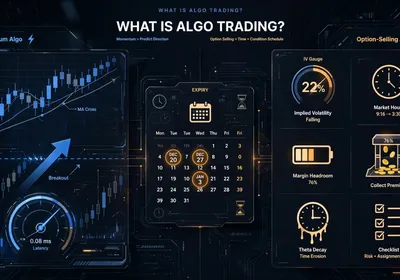
Most 'what is algo trading' pages assume the algo is chasing a directional signal. Ours checks a clock, an IV level and margin headroom instead — here's what that actually changes.
Most comparisons list margin and premium differences and stop. The useful framing is risk shape: a futures line runs straight through zero both ways, a short option's line is flat then kinked.
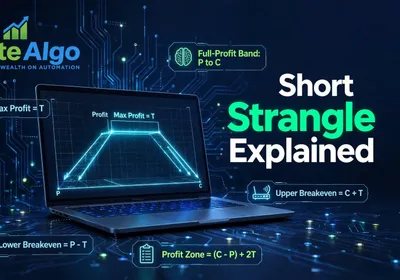
Both legs of a short straddle sit at the same strike, so gamma concentrates at one point instead of spreading across two. Here is the breakeven math, sizing and when our desk runs it.
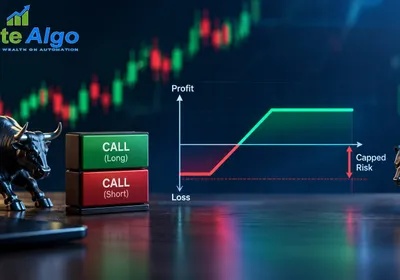
Every explainer defines call and put from the buyer's side. Flip it: a call seller bets price stays below strike, a put seller bets it stays above — and here is why a strangle runs both.
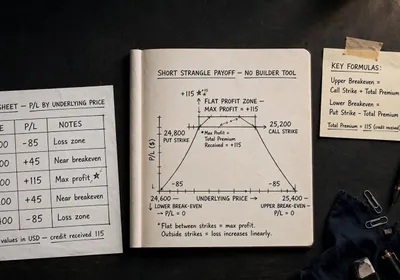
Draw a short strangle's payoff line by hand, point by point, so you can check any builder tool's breakeven and max-loss numbers in thirty seconds.
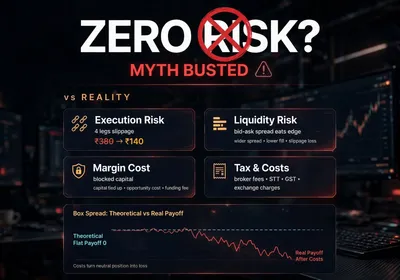
Box spreads and other "zero risk" structures have a real, flat payoff diagram. Here is where execution, liquidity, margin and tax quietly erode that edge.
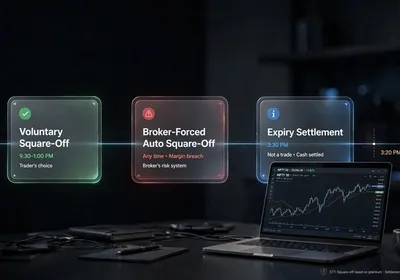
Square off has three meanings near expiry — voluntary exit, broker auto square-off, and exchange settlement — and conflating them is where sellers lose money and overpay STT.
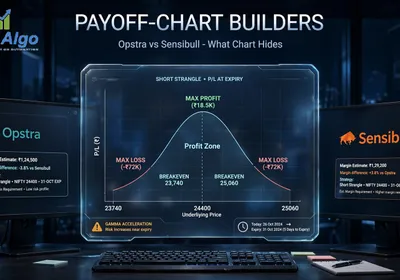
Opstra vs Sensibull on margin accuracy, Greeks and leg limits, and why a static expiry payoff chart can misread as today's P&L when it is really expiry's P&L.
The equity covered call assumes you own shares and sell a call against them. On NIFTY you hold margined futures instead — here is how that changes the risk, the rollover and the payoff.
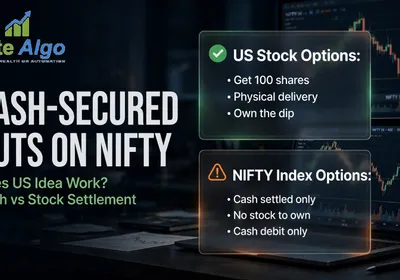
The US cash-secured put is a funded limit order on a stock you want. NIFTY options are cash settled with no stock to receive — what actually transfers, and what doesn’t.
A Black-Scholes price tracks the live NIFTY option market closely for most of a session — until the final 30-60 minutes, when constant-volatility and continuous-time assumptions visibly strain.
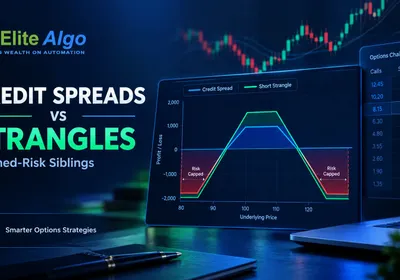
An iron condor is a short strangle with two insurance legs added. The wings cap your loss and cut margin — but they cost 15-20% of your premium on every trade.
STT on options is two separate charges, not one — small on the sell side, far larger if a leg is exercised ITM. The worked rupee comparison most cost models skip.
The two hedge tools worth the cost on a short strangle — a far-OTM wing and a futures delta hedge — their real cost, and why cutting lot count usually beats both.
What a strangle means, the two legs that define it, both break-evens, where the risk actually sits, and how it behaves into expiry. Reference, not advice.
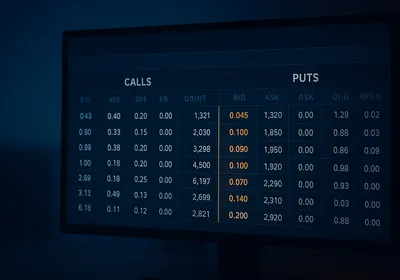
What an option chain is, how the screen is laid out, what every column means including open interest and IV, and how to read a single row end to end.
What a Python algo trading stack for Indian index options actually contains — data, signal, order routing, risk, logging — and where the work is really hidden.
What each Indian broker's trading API publicly documents — endpoints, auth model, token validity and rate limits — and what to check before you build on one.
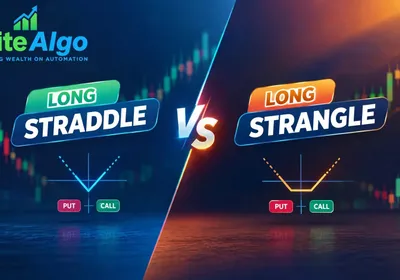
The long straddle and long strangle derived properly — what you pay, the break-evens, the three ways to be right and still lose, and why this desk sells instead.
We ran the same NIFTY strangle through NSE's margin calculator and a broker's live terminal — the gap ran 18%, and here's why your broker's number is the one that matters.
What SPAN margin and exposure margin each compute for a NIFTY strangle, why the blocked figure moves intraday, and the buffer we carry for peak margin risk.
Every option-selling structure in one place — naked, defined-risk and asset-backed — what each one trades away, and which dedicated page covers it in full.
What a short straddle is, how its payoff and break-evens work, where the risk actually sits, and how it behaves into expiry. Reference, not a trade idea.
What delta, gamma, theta and vega each measure, what moves them, how to read them on an option chain, and what a seller is actually exposed to on each one.
The end-to-end method for backtesting an option-selling strategy — data granularity, honest costs, the India traps, and what a backtest can never tell you.
What historical options data for Indian index options actually consists of, which granularity answers which question, where the official sources are, and the traps.
How F&O income is taxed in India — business income not capital gains, STT mechanics, turnover, loss carry-forward, advance tax and audit. Structure, not stale rates.
What actually happens when you sell an option — the order, the margin, the daily mark-to-market, and expiry. One worked example end to end, no strike picks.
Buying vs selling options — win rate against payoff size, why selling needs more capital, and what our own 163 logged sessions say about the high-win-rate story.
What hedging an option-selling position actually buys you — the four hedge types, what each costs, and the one thing no hedge protects against on expiry day.
Covered calls and cash-secured puts are the same trade twice — selling a put. The payoff arithmetic, what "covered" really covers, and where both go wrong.
What 163 logged expiry sessions and a 438-day engine test actually measured about option-selling and algo-trading results — including the parts that lost money.
A NIFTY option seller's read on butterfly and iron butterfly spreads — the payoff arithmetic, what the wings cost, and why our own tests did not favour them.
How converting one wing of a NIFTY strangle into a credit spread changes margin, the real premium cost, and what it does not protect against.
Why an option-selling desk converts a naked short into a bull call or bear put spread — the margin relief, the real premium cost, and what it does not protect.
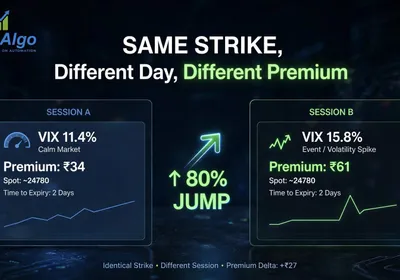
Same strike, same days-to-expiry, same spot — why premium still differs week to week. Real session comparisons, pre-event IV run-up, rich-vs-cheap rule, FAQ.
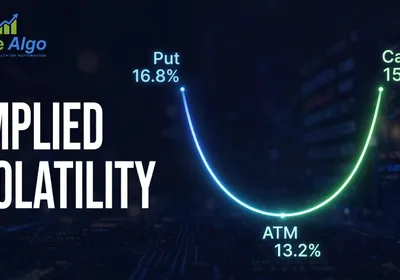
Implied volatility is backed out of an option's price, not forecast. Why every strike has its own IV, VIX vs a strike's IV, IV percentile, and IV crush.
Writing an option means accepting a real obligation, not collecting free money. What "call writer" legally means, margin, naked writing, and cash settlement.
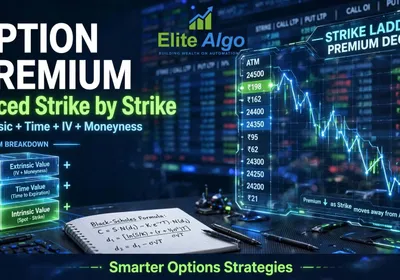
See exactly which inputs set option premium: time, IV, spot-strike distance. Worked NIFTY example, hour-over-hour breakdown, FAQ.
A short option's premium splits into intrinsic value and time value — only time value decays. Worked NIFTY examples, and why an ITM short doesn't decay like an OTM one.
Moneyness, not premium size, decides which strike a seller should take. A worked NIFTY chain example, why ITM sells are a trap, and how moneyness shifts intraday.
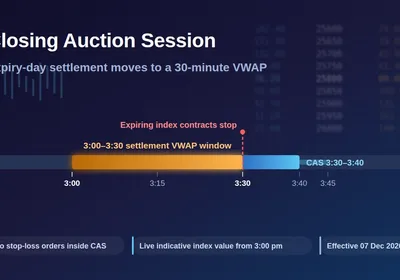
SEBI's October 15 circular stops expiring index contracts at 3:30 pm and settles them on a 3:00-3:30 pm constituent VWAP instead of the closing print. Clause by clause, with both implementation dates.
Streak caps you at five conditions, locks you to Zerodha, and has no native multi-leg options support. Seven real alternatives, mapped against those three limits, not generic feature lists.
The only AlgoTest-vs-Quantiply comparison online is written by AlgoTest. Here's the independent read, narrowed to the one question expiry-day sellers actually care about: fill-timing accuracy.
No page on the market compares these two on the axis an option seller actually cares about: combined trailing SL across multi-leg positions, not per-leg. Here's what we found running both.
Most Sensibull alternative roundups are written for any options trader. This one isn't — 7 tools picked for a seller's peak-margin, multi-leg backtesting, and execution gaps, compared and ranked.
Theta looks like the whole story until the gamma crossover hits, usually from 13:30 IST. Our own delta walk, stop-loss comparison, and the three rules that fall out of it.
Most columns in the NIFTY option chain don't matter to a seller. The six that do, the reading order that works, and the spread math that changes a strike call.
Every dashboard shows a max-pain number with an arrow implying price is headed there. We hand-calculated it, tracked it intraday, and measured 40 expiries to see how often the close actually lands near it.
Every page-one result gives the same lookup-table number. The current NIFTY, BANKNIFTY, FINNIFTY and SENSEX lot sizes, and the rupees-per-point, margin-vs-risk and VIX-based sizing math the lookup tables skip.
The four-box buildup table everyone copies can't show who initiated a trade. What NIFTY open interest actually measures, and the liquidity and crowding reads that hold up for sellers.
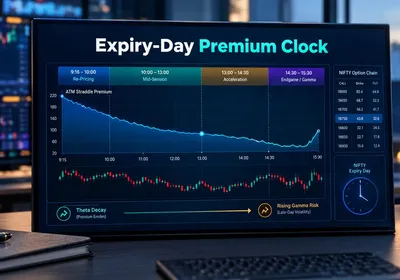
NIFTY expiry day isn't one straight decay line. See the hour-by-hour premium clock, pin risk, and a paper-trade-first session template from our own desk.
The ATM straddle chart falls, jumps and sits flat for reasons most traders never learn. The four shapes, the expiry-day clock, and what each means for a seller.
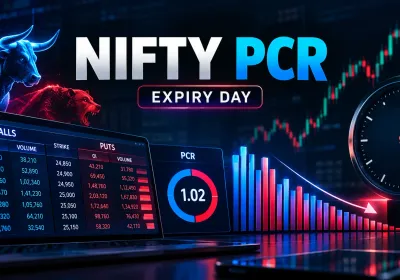
The 0.7/1.3 PCR bands were never calibrated on NIFTY. Why the ratio's arithmetic breaks specifically on expiry day, and how our desk actually uses it as a gate.
What a clean paper run genuinely proves about an option-selling algo, what it structurally hides on fills, slippage, and margin, and the checklist before risking live capital.
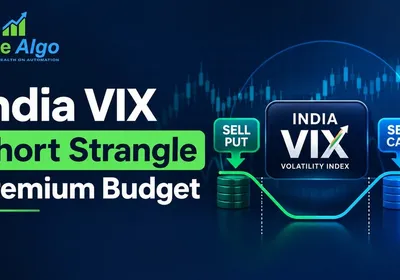
Convert India VIX into an expected NIFTY move, a premium budget and a sane strike distance — plus the VIX-band decision table we read before the open.
11 options backtesting platforms compared on price, data depth and leg limits. Every figure read from the vendor's own pricing page in October 2026.
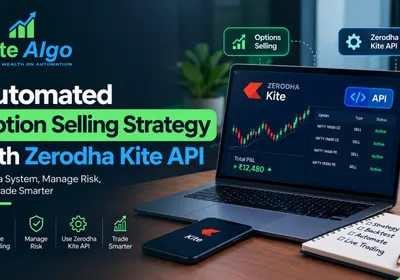
How automated option selling actually works on Zerodha's Kite Connect API, what it can and cannot do, and a checklist before connecting live capital.
How Sensex weekly expiry option selling actually works: strike selection, IV behaviour, position sizing, and the risk rules that matter.
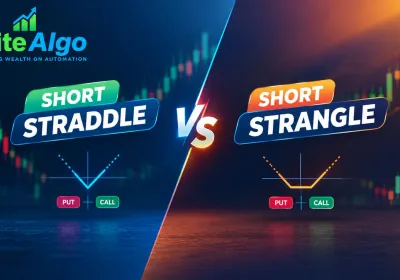
A practitioner's comparison of short straddles and short strangles for NIFTY weekly expiry — payoff mechanics, Greeks, and risk rules.
An option-seller's comparison of Tradetron, AlgoTest, and QuantMan — backtesting depth, multi-leg execution, broker support, and where each platform falls short for NIFTY/SENSEX expiry-day strategies.
Five Algobi alternatives for Indian option sellers, ranked by real backtesting depth for multi-leg NIFTY/SENSEX strategies — not follower counts or marketing claims.
A practitioner's breakdown of what connecting AlgoTest to a Zerodha account actually does and doesn't do for multi-leg NIFTY/BANKNIFTY option-selling strategies.
Backtesting depth, expiry-day execution, margin handling, and pricing — how to pick the right algo trading platform for NIFTY/SENSEX option selling.
A practitioner's guide to building an option selling strategy for consistent monthly income on NIFTY — expiry-day mechanics, risk management, and backtesting.
How Nifty option selling works, risk management, strike selection, and how algo trading removes emotional errors — a SEBI-aware beginner guide.
Envision the stock market opening and the screen revealing opportunities but you still hesitate. Discover how automation and data-driven strategies change the game.
A complete guide to SEBI regulations for algorithmic trading in India — exchange approval rules, compliance requirements, and what traders need to know before deploying an algorithm.
Automate Nifty and Sensex trading with rule-based algo strategies. Expiry-day trading for NSE/BSE F&O with pre-defined risk limits.
Algo trading in India, explained properly: the live SEBI retail framework, the four routes in, real costs, margins, taxes and a 10-step start plan.
Algo trading is a process in which trades are placed using complex algorithms. Here are the top firms in Delhi worth knowing.
Every free tier re-verified in October 2026 — what you can actually do at zero cost on NSE and BSE, exactly where each cap stops, the platforms that only pretend to be free, and why SEBI's static-IP rule now costs more than the software.
Algo trading replaces hesitation with rules. A breakdown of the strategy families we run, how each is backtested, and where each one fails.
By now you might know what algo trading is and its advantages. But knowing the risks and limitations is equally important before you invest.
Ten platforms worth shortlisting, with every price re-verified in September 2026 — and the five entries we removed, including one product that no longer exists.
Ready to Automate?
See how EliteAlgo's rule-based algorithmic strategies execute without emotion, under pre-defined risk limits. Learn about our algo trading services or discover our story since 2006.
Get Started Today