Quick Answer
A covered call is owning the underlying and selling a call against it. A cash-secured put is holding enough cash to buy the underlying and selling a put. They are usually taught as two different "income strategies". They are not: their payoff profiles are identical — both are a short put on the same underlying, differing only in where your capital is sitting while you wait. Both collect a premium, both cap your upside, and neither protects you from a fall. The word "covered" does not mean the loss is covered. It means the obligation is covered: you can deliver the shares, or you can pay for them. You still eat the entire decline in the thing you hold.
Paper trade every structure in this piece before it touches live capital. Nothing below is investment advice, and nothing here recommends a stock, a strike or a structure — it is how we read these two positions on our own desk, and it is analysis, not a signal.

What "selling a put" actually obligates you to
Start here, because both structures are built on it and the phrase is widely misunderstood.
When you sell a put, you receive a premium now, and in exchange you accept this obligation: if the buyer exercises, you must buy the underlying at the strike price, whatever it is actually worth at that moment. You have sold someone the right to hand you the asset at a fixed price.
So selling a put is a position that says, in effect: I am willing to own this at the strike, and I am being paid to wait and see whether I have to.
- If the underlying stays above the strike, the put expires worthless. You keep the premium. You never buy anything.
- If the underlying finishes below the strike, you buy at the strike. Your effective purchase price is the strike minus the premium you collected — better than the strike, but worse than the market price you could have paid instead.
- If the underlying collapses, you still buy at the strike. The premium you collected is a fixed, small offset against a loss that is limited only by how far the asset can fall.
That third bullet is the whole risk and it is the part the word "income" obscures. Our page on being the option writer and what it obligates you to goes through this asymmetry in more depth.
The covered call
You own the asset. You sell a call against it at a strike above the current price. The shares you own are what makes the call "covered" — if the call is exercised you deliver them, so you are never short the asset.
What you get: the call premium, immediately and unconditionally.
What you give up: everything above the strike. If the asset rallies hard, your shares are called away at the strike and you do not participate in the move beyond it. Your maximum profit on the whole package becomes the gain to the strike plus the premium, and that is a ceiling.
What you do not get: any protection at all. If the asset falls, you lose on the shares exactly as you would have anyway, minus the premium you collected. A covered call softens a fall by precisely the premium and not one rupee more.
Worked through with illustrative round numbers — a share at ₹1,000, a one-month ₹1,050 call sold at ₹25:
| Share at expiry | P&L on shares | P&L on short call | Total |
|---|---|---|---|
| ₹1,200 | +₹200 | −₹125 | +₹75 — capped |
| ₹1,050 | +₹50 | +₹25 | +₹75 — the maximum |
| ₹1,000 | ₹0 | +₹25 | +₹25 |
| ₹950 | −₹50 | +₹25 | −₹25 |
| ₹800 | −₹200 | +₹25 | −₹175 |
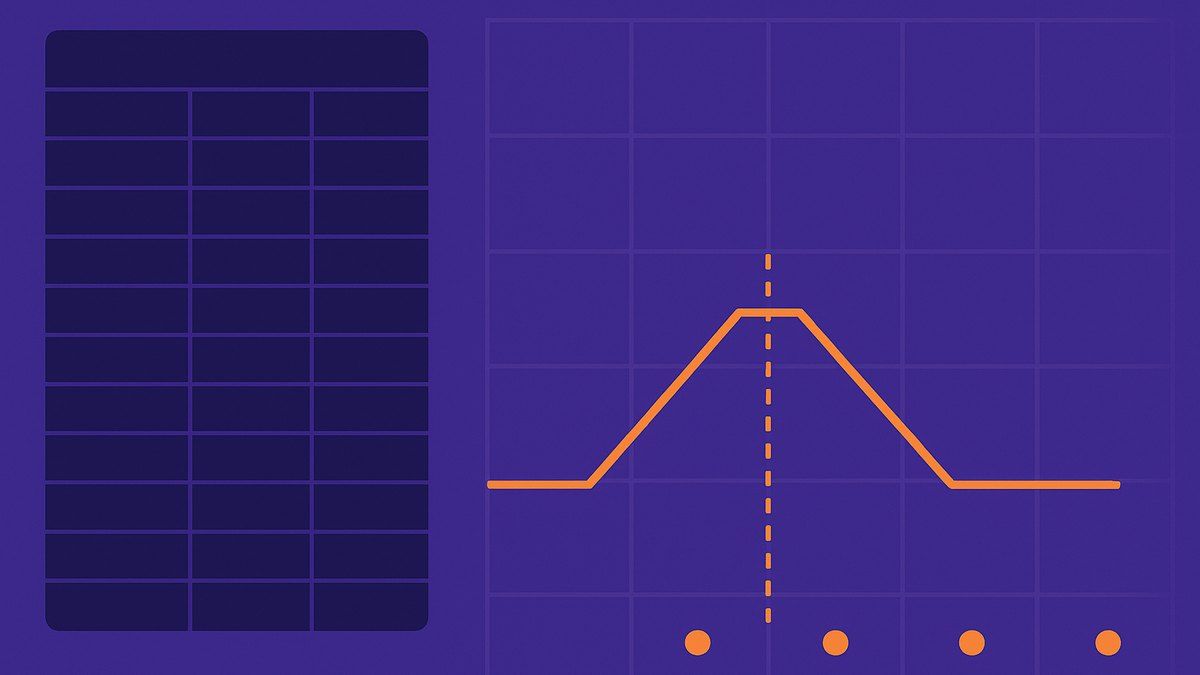
Read the first two rows and the last one together. The position makes its maximum at the strike and makes exactly the same maximum at any price above it — the upside is flat from ₹1,050 to infinity. Meanwhile the downside continues all the way to zero, cushioned by a fixed ₹25. That is the shape of a short put. Capped upside, uncapped downside, a premium collected at entry.
The cash-secured put
You do not own the asset. You hold enough cash to buy it at the strike, and you sell a put at that strike.
What you get: the put premium, immediately.
What you give up: participation in any rally. If the asset rises, the put expires worthless, you keep the premium, and you still do not own the asset you presumably wanted to own. Your gain is capped at the premium.
What happens if it falls: you buy at the strike, at an effective cost of strike minus premium, and you now own an asset that is worth less than you paid for it. The loss runs down with the asset.
Same illustrative numbers — the ₹1,000 share, a ₹950 put sold at ₹20, with ₹950 of cash set aside:
| Share at expiry | Put exercised? | Position | Total P&L |
|---|---|---|---|
| ₹1,200 | No | Still holding cash | +₹20 — capped |
| ₹1,000 | No | Still holding cash | +₹20 |
| ₹950 | At the line | Bought at ₹950 | +₹20 |
| ₹900 | Yes | Own at effective ₹930 | −₹30 |
| ₹800 | Yes | Own at effective ₹930 | −₹130 |
Flat capped upside, downside running with the asset, premium collected at entry. The same shape as the covered call table above. That is not a coincidence.
Why they are the same trade
This is the single most useful fact on the page and it is rarely stated plainly.
A covered call and a cash-secured put at the same strike on the same underlying with the same expiry have the same payoff diagram. Capped flat above the strike, sloping down below it, offset by a premium. They are both synthetic short puts.
Why is that so? Because of put-call parity — the arithmetic relationship that ties together the price of a call, the price of a put at the same strike, and the price of the underlying. Owning the asset and selling a call is algebraically equivalent to selling a put. The market prices them that way, which is why the premiums you can collect on the two are closely related rather than independent.
The practical differences, which are real but are not differences in risk:
| Covered call | Cash-secured put | |
|---|---|---|
| You start by | Owning the asset | Holding cash |
| Dividends during the period | You receive them | You do not |
| If assigned | Shares leave your account | Shares enter your account |
| Tax events | Sale of shares may be triggered | Purchase, no sale triggered |
| Transaction costs | You already paid to buy the shares | You pay only if assigned |
| Payoff shape | Identical | |
So the choice between them is a question about dividends, tax timing and whether you already hold the asset — not a question about which is safer. If somebody presents one as the conservative version of the other, they have not drawn the diagrams.
Where both strategies actually go wrong
Four failure modes, in the order we see them cause damage.
1. The premium is treated as income and the downside is treated as hypothetical. These are usually marketed as "generate monthly income from your holdings". The premium is real and arrives on day one, which makes it feel like a yield. It is not a yield — it is payment for an obligation whose cost is unknown at the time you are paid. Collect it twelve times, lose more than twelve months of it in one quarter, and the arithmetic is unchanged by how the twelve payments felt.
2. The capped upside gets paid for in the one month that mattered. Most months the asset does not run away and the cap costs you nothing visible. The distribution of equity returns is not evenly spread — a large share of long-run gains arrives in a small number of strong periods. A covered-call programme is systematically absent from exactly those periods. This is the cost people under-count because it is invisible in every month except the ones where it is enormous.
3. "Covered" is misread as "protected". Covered means you can meet the obligation. It says nothing about your loss. A covered call on an asset that halves loses nearly half your capital, premium or no premium.
4. Rolling turns a position into a habit. When the asset runs past the strike, the standard response is to buy back the call and sell a higher one further out — "rolling". Each roll is two more legs of cost and spread, and each roll is a decision to keep capping an asset that has just demonstrated it can run. Rolling is not risk management; it is re-entering the same trade at a worse price while telling yourself it is the same trade.
Cost, which decides more of this than the strategy does
Both structures collect a modest premium, which means the cost of trading them is a large proportion of the upside. Brokerage, STT, exchange charges and — larger than all of them — bid-ask slippage land on a small fixed credit rather than on a large potential gain.
Three specifics for these two positions:
- Single-stock options are thinner than index options. The bid-ask spread on a stock option, particularly away from the money or on a less active name, can be a meaningful fraction of the premium. You cross it entering and again exiting or rolling.
- Stock options carry physical settlement considerations near expiry. If a short stock option is in the money at expiry, delivery obligations apply, and brokers have their own handling and charges for that. Find out what yours does before, not after.
- Letting an in-the-money short option expire triggers a settlement-side charge computed on a far larger base than the premium. This is the expiry cliff described in our costs page. It is why many desks treat squaring off before expiry as an execution rule rather than a decision.
Where this sits relative to what we do
Honestly: outside it. Our work is systematic intraday option selling on NIFTY and SENSEX — expiry-day structures sized to the account, held for hours, squared off before settlement. Covered calls and cash-secured puts are the opposite temperament: single-name or single-asset positions held for weeks against a holding you want to keep.
The one piece of our own data that transfers is about how premium-selling P&L behaves over a holding period, and it is not encouraging for the "steady income" framing. Across 163 logged expiry sessions on our own book, the median give-back from the session's intraday profit peak to its close was 42.8%, and about 30% of sessions turned a position that had been profitable at its peak into a loss by the close. That is an intraday measurement on index options, not a monthly one on stock options, so do not transplant the number. Transplant the lesson: premium-selling profit is not banked when it appears on screen. It is banked when the position is closed, and a large share of what appears does not survive.
And the broader negative we publish rather than hide: when we tested a technical-signal-driven option-selling engine across 438 trading days, the naked short strangle lost on the order of ₹499 per lot per day at zero slippage, the defined-risk version lost more, and none of eighteen structure-and-parameter combinations passed our acceptance gate. Selling premium is a shape, not an edge. Our fuller treatment is in option buying vs option selling, settled with arithmetic.
If you want to test either one properly
- Model it as a short put, because that is what it is. One model covers both structures and removes the temptation to evaluate them differently.
- Include the periods you would rather exclude. A covered-call programme tested on a sideways stretch looks excellent. The test that matters includes a strong rally, where the cap costs you, and a sharp fall, where the premium does not save you.
- Apply real costs per leg including the roll legs, and use stock-option spreads rather than index-option spreads if that is what you will trade.
- Compare against simply holding the asset, unhedged, over the same period. That is the honest benchmark, and it is the comparison most covered-call material leaves out.
- Look at the full distribution, not the average month. The strategy's whole character is in the tails.
Our guide to options backtesting software in India covers the tooling, and paper trading an option-selling algo covers the step between a backtest and live capital.
Frequently Asked Questions
What is a covered call strategy?
A covered call means you own the underlying asset and sell a call option against it at a strike above the current price. You receive the call premium immediately. In exchange you give up any gain above the strike — if the asset rallies past it, the shares are called away and you do not participate further. The shares you own are what makes the call covered: you can meet the delivery obligation. Importantly, it provides no downside protection. If the asset falls you lose on the shares exactly as you would have anyway, cushioned only by the premium collected.
What does selling a put option mean?
Selling a put means you receive a premium now and accept an obligation: if the buyer exercises, you must buy the underlying at the strike price regardless of what it is actually worth at that moment. You have sold someone the right to hand you the asset at a fixed price. If the asset stays above the strike, the put expires worthless and you keep the premium. If it finishes below, you buy at the strike, at an effective cost of the strike minus the premium. If it collapses, you still buy at the strike, and the premium is a small fixed offset against a much larger loss.
What is a cash-secured put?
A cash-secured put is selling a put option while holding enough cash to buy the underlying at the strike if you are assigned. The cash is what makes it secured — you can meet the purchase obligation rather than relying on margin. You collect the premium, your maximum gain is that premium, and if the asset falls below the strike you end up owning it at an effective cost of the strike minus the premium, with the loss continuing down with the asset from there.
Is a covered call the same as a cash-secured put?
In payoff terms, yes. A covered call and a cash-secured put at the same strike, on the same underlying, for the same expiry have the same payoff profile: flat capped gain above the strike, loss sloping down below it, offset by the premium collected. Both are synthetic short puts, which follows from put-call parity — owning the asset and selling a call is algebraically equivalent to selling a put. The real differences are dividends during the holding period, which the share owner receives, the tax event triggered on assignment, and whether you already hold the asset. None of those is a difference in risk.
Does a covered call protect me if the stock falls?
No. This is the most common and most expensive misreading of the word covered. Covered means you can meet the delivery obligation if the call is exercised, because you hold the shares. It says nothing about your loss. If the stock falls, you lose on the shares exactly as an unhedged holder would, reduced by the premium you collected and no more. A covered call on a stock that halves loses you close to half your capital. If you want downside protection you have to buy a put, which costs money rather than earning it.
When should you sell a put option?
We do not recommend entry conditions, and the honest framing is a question rather than a rule: are you genuinely willing to own this asset at the strike price, in the scenario where you are assigned because it has fallen? If the answer is no, the premium is not compensation for the obligation you have taken on. If the answer is yes, then the put premium is payment for waiting. Beyond that, the decision depends on your capital, your view on the asset, the premium available relative to the volatility of the underlying, and your tax position — none of which anyone can assess for you from a web page.
What is the main risk of a covered call?
Two risks, and people only count one. The visible risk is the capped upside: if the asset rallies past the strike, your gain stops there, and because a large share of long-run equity returns arrives in a small number of strong periods, a covered-call programme is systematically absent from exactly the periods that matter most. The under-counted risk is that you still own the asset, so the entire downside remains yours, softened only by the premium. A third practical risk is rolling — buying back the call and selling a higher one each time the asset runs, which adds cost and spread on every cycle while repeatedly capping an asset that has shown it can move.
Are covered calls a reliable source of monthly income?
The premium is reliable; the net outcome is not. Premium arrives on day one and feels like a yield, but it is payment for an obligation whose cost is unknown when you are paid. Twelve months of premium can be lost in one quarter, and the arithmetic is not changed by how steady the twelve payments felt. The honest benchmark is to compare a covered-call programme against simply holding the asset over the same period, including the strong rallies where the cap costs you and the sharp falls where the premium does not save you. That comparison is the one most covered-call material omits.
The Bottom Line
A covered call and a cash-secured put are the same position drawn twice: a short put, with capped upside above the strike and uncapped downside below it, paid for with a premium at entry. "Covered" means the obligation can be met, not that the loss is protected — a covered call on an asset that halves loses nearly half your capital. The choice between the two forms is about dividends, tax timing and whether you already hold the asset, not about risk. The real costs are the invisible ones: the rally you were capped out of, the roll legs you paid for, the single-stock spread you crossed four times, and the settlement charge if you let an in-the-money short option expire. Model either structure as a short put, test it including the rallies and the falls, benchmark it against just holding the asset, and read the premium as payment for an obligation rather than as income.
This article is for educational and informational purposes only and does not constitute investment advice. EliteAlgo is proprietary trading research and analytical software; it is not a SEBI-registered investment adviser and does not provide investment advice, stock recommendations or trading tips. No security, strike, expiry or structure mentioned above is recommended. Writing options, including covered calls and cash-secured puts, involves substantial risk of loss and is not suitable for all investors; a covered call does not protect against a decline in the underlying. Contract specifications, settlement procedures, margin requirements and charges are set by the exchanges, the government and your broker and are revised from time to time — verify current figures before trading. Backtested and logged results describe what our own data did over a specific sample and do not guarantee future outcomes or imply any expected return. Paper trade before deploying live capital and consult a SEBI-registered investment advisor before trading derivatives.