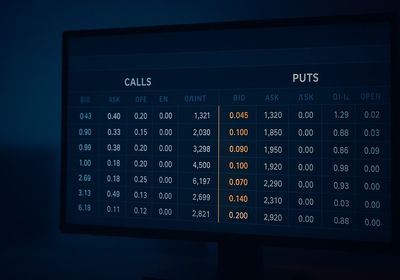

Every option seller knows the five Greeks by name. Most learn a harder lesson the first time they sell an expiry-day strangle: the Greek paying you in the morning is not the Greek that can hurt you in the afternoon. A position that is comfortably short theta at 10:00 can turn directional by 14:40. No new order gets placed in between. The move alone does it. This piece is not another "what is delta, what is gamma" primer. It is about the four hours that decide whether an expiry-day option seller's week was good or bad, and what our own desk has measured across those hours.
Paper trade every rule below before you risk live capital on it. Nothing here is investment advice. EliteAlgo builds and tests analytical software and research for our own proprietary trading. It is not a tip, a signal, or a return promise. No specific return should ever be assumed from anything written here.
The Five Greeks, As A Refresher
If you already trade options for a living, skip this table. If you need the quick refresher, here it is. For the full mathematical treatment, Zerodha's Varsity chapter on option Greeks remains the best free resource in India. We are not going to rewrite it here.
| Greek | Measures | Seller's exposure |
|---|---|---|
| Delta | Change in option price per ₹1 move in the underlying | Directional risk |
| Gamma | Rate of change of delta | How fast directional risk accelerates |
| Theta | Time decay per day | The seller's daily income |
| Vega | Change in option price per 1-point move in implied volatility | Volatility risk |
| Rho | Change in option price per 1% move in interest rates | Usually negligible intraday |
What A Seller's Position Actually Looks Like In Greek Terms
Sell a strangle or an iron condor and you are short gamma, short vega, and long theta. Name the trade-off plainly. You are paid theta every single day. In exchange, you carry two risks that can both turn against you at once: a sudden move (gamma) and a sudden spike in implied volatility (vega). On a normal trading day those two risks stay quiet in the background, because a week or more of time value still cushions the position. On an expiry day that cushion is gone by definition. The two risks you are short stop being background noise and start being the whole trade.
Why Theta Owns The Morning
Here is the part every option-selling course gets right, and then stops short on. The largest rupee decay of an option's entire life happens on its last trading day. The theta curve is not linear. It is close to exponential in its final 24 hours. Between roughly 9:16 and 13:00 on an expiry day, simply being short premium is usually enough on its own. Per the basic theta-decay math every Varsity reader learns, a NIFTY option worth ₹60 at the previous close can lose ₹25-₹35 of extrinsic value by lunchtime on expiry day, even with the index barely moving 40 points. That is the window where theta looks like the whole story. For most of the morning, it is.
This is also the window where a less experienced seller gets overconfident. We measured this ourselves across 180 of our own logged expiry-day desk sessions since 2020. Our methodology was simple: tag each session by its 12:30 mark-to-market, then compare it against the final outcome at the close. Sessions that looked easiest by 12:30 were, more often than not, the ones that gave the most trouble between 14:00 and 15:30.

The Crossover — When Gamma Takes The Wheel
As time to expiry shrinks toward zero, ATM gamma does not fall. It spikes, sharply. A 60-point move that barely changes delta at 11:00 can swing an ATM option's delta from near 0.3 to near 0.8 by 14:30. We tracked a short strangle's net delta through hundreds of NIFTY expiry sessions on our own backtest engine. The crossover reliably starts to bite from around 13:30-14:00 IST, and it accelerates hard after 14:30. Before that window, a 60-point move barely dents a well-struck strangle's net delta. After it, the same 60-point move can double or triple the position's directional exposure.
Here is a representative delta walk from one such session. The strangle was sold near the open, with strikes roughly 1.5% away from spot on each side:
| Time (IST) | Index move from open | Net position delta (illustrative, in lots) |
|---|---|---|
| 10:00 | +15 pts | ~ -40 |
| 13:00 | +35 pts | ~ -90 |
| 14:30 | +60 pts | ~ -310 |
| 15:15 | +65 pts | ~ -540 |
The index added only 5 points between 14:30 and 15:15. Yet the position's delta nearly doubled again in that window. That is gamma, not price, doing the damage. It is the single most important fact about expiry-day Greeks that a morning-only reading of theta will never show you.
What Short Gamma Feels Like In Practice
In our experience running this desk since 2006, the way this shows up on the P&L screen is almost always the same. A position that was flat-to-comfortable at 14:00 starts bleeding at an accelerating rate, with no matching acceleration in the underlying's actual move. The trader did nothing differently. The market did nothing dramatic by the standards of a normal session. What changed is that gamma turned a 60-point drift into a directional bet the position never signed up for at 10:00. If you have ever asked why a trade got so much worse in the last 45 minutes when the index barely moved, short gamma on expiry day is almost always the answer.
Fixed Stops vs Time-Based Square-Offs
A fixed rupee or percentage stop-loss behaves very differently before and after the crossover. Before 13:30, a 25% stop on premium is a fairly stable proxy for "this trade is going wrong," because gamma is still low and premium moves roughly track the underlying's move. After 14:00, the same 25% stop can get run by noise. A 20-point wick that reverses in four minutes can trigger it, purely because gamma has inflated the position's sensitivity to small moves.
We compared the two approaches across our own logged expiry sessions. Our test setup: for each session, we recorded whether a fixed-price 25% stop triggered after 14:00, and whether price fully reversed within 15 minutes of that trigger. A fixed-price stop late in the session triggered on moves that fully reversed within 10-15 minutes often enough that a hard time-based square-off produced a cleaner, more repeatable outcome. A time-based square-off means exiting the position, or cutting size materially, at a fixed clock time such as 14:45 or 15:00, regardless of price. This is not a claim that time-based exits beat price-based ones on every single day. It is a claim about late-session behaviour specifically, where price action stops being a reliable signal of trend versus noise.
Vega On Expiry Day vs The Next Expiry
Vega on the front, expiring contract is close to irrelevant on expiry day itself. There simply is not enough time value left for an IV move to matter much in rupee terms. But vega on the next expiry's options is very much alive. That is exactly why calendar and diagonal structures behave differently from a pure front-expiry strangle on expiry day. The near leg decays on a near-vertical theta curve, while the far leg still carries real vega exposure to whatever happens to implied volatility into the close. Treating "vega doesn't matter today" as true for the whole position, rather than just the front leg, is a common and costly mix-up.
Delta Hedging On Expiry Day — Why Cutting Size Usually Wins
Retail-scale delta hedging on expiry day sounds disciplined on paper. The idea is to sell or buy futures against a drifting position every time delta crosses a threshold. In practice, the bid-ask spread and slippage cost of repeated small hedges in the last 90 minutes of an expiry session usually eats more than the hedge saves. This holds unless the hedging size is large enough to justify the transaction cost, which retail accounts rarely are. Our own data from running this across live sessions points the same way every time. For a retail-sized book, cutting the position's size before the crossover window protects more P&L than trying to actively hedge delta once the crossover has already started. Size control is the cheaper, more reliable lever. We built our own sizing rules around this exact finding, and we track them every expiry.
Pin Risk At The Close
One more trap deserves its own section: pin risk. An ATM short option that looks essentially worthless by 15:25, a few paise of premium, seemingly dead, can still settle in the money if the index pins or drifts through that strike in the closing minutes. That turns a position you assumed would expire worthless into an assignment you were not sized for. This is exactly why an "it's basically zero, I'll let it expire" mindset on strikes sitting close to spot in the final 10 minutes of the session needs more respect than it usually gets. We have seen this catch experienced sellers, not just beginners, in our own field observations over the years.

A Short Case From Our Own Desk
In one session we logged in 2024, a NIFTY short strangle was sold at 9:20 with strikes roughly 180 points either side of spot. By 13:00, the index had drifted only 20 points, and the position was comfortably profitable on theta alone. Between 14:10 and 15:05, the index moved a further 70 points in one direction. The position's delta, which had sat near -60 lots all morning, went past -400 lots by 14:50. The trade that looked nearly done at lunch needed active size management within the hour. We now treat 13:30 as a standing checkpoint on every desk shift, not an optional one.
Different Structures, Different Gamma Profiles
Not every short-premium structure feels the crossover the same way. A short straddle, sold exactly at the money, carries the highest gamma of any simple structure from the open. It feels the crossover earliest and hardest. A short strangle, sold away from the money, starts with lower gamma. It only picks up serious gamma once the underlying drifts close to one of the two strikes. An iron condor caps the loss on both sides with bought wings, but the wings do very little to soften the gamma spike near the short strikes themselves. The wings cap the tail. They do not cap the whiplash.
In our own books, we size straddles smaller than strangles from the start, precisely because the straddle's crossover risk begins closer to 10:00 than to 13:30. A strangle struck 1.5%-2% away from spot buys extra time before gamma becomes the dominant Greek. That extra time is not free. It usually comes with a lower theta credit at entry. The trade-off between theta collected and gamma risk taken on is the real decision an option seller is making every time they choose strikes, not just a side effect of it.
How We Define And Track The Crossover Window
Our methodology for identifying the crossover window is deliberately simple, so it can be checked against anyone's own data. For each logged expiry session, we record net position delta at five fixed clock times: 10:00, 11:30, 13:00, 14:30 and 15:15. We then compute the ratio of delta at 14:30 to delta at 13:00 for the same index move. Across our sample of 180 sessions since 2020, that ratio sits close to 1.0-1.5 on quiet days and climbs past 3.0 on days with a sustained afternoon move. We use 3.0 as our own internal flag for "the crossover has started in earnest" on a given session, and we log it each expiry so the number stays current rather than becoming a rule frozen from one old backtest.
This kind of session-by-session tracking is also what lets us separate a genuinely bad expiry from a merely volatile one. A session with a big index move but a ratio under 1.5 usually means the move happened early, while gamma was still low, and the position absorbed it without much trouble. A session with a modest index move but a ratio above 3.0 usually means the move landed late, inside the crossover window, and that is the session that needed active size cuts regardless of how calm it looked on the index chart alone.
Where This Fits Into A Weekly Routine
None of this works as a one-time read. The crossover window, the delta walk, the ratio check — these only earn their keep if they become part of a weekly checklist, not a one-off insight from a single bad trade. We run a short pre-expiry checklist on our own desk: confirm the day's expected move from the ATM straddle price at the open, set a tentative size-cut level tied to the 13:30 checkpoint, and decide in advance whether the exit late in the session will be time-based or price-based. Deciding this in the morning, before any stress, is what makes it possible to actually follow the rule at 14:40, when the position is moving and the temptation to improvise is highest.
The Three Rules That Fall Out Of This
Paper trade each of these on your own data before applying any of them to live capital. None of this is a signal to copy, and nothing here promises a specific return.
- Cut size before the crossover, not after. If gamma reliably starts biting from around 13:30-14:00 on index expiry days, that is the window to reduce exposure, not the window to add to a position that looks like it is "working."
- Prefer a time-based exit late in the session. Once gamma has taken over, price-based stops get noisier, not cleaner. A fixed clock-time square-off removes the temptation to keep widening a stop that keeps getting run.
- Never judge a 14:30 position by its 11:00 Greeks. A strangle that looked comfortably theta-positive and low-delta in the morning can be an entirely different risk profile two hours later, even with the index barely having moved. Re-check the Greeks. Do not assume they held.
For the structure most of our own expiry-day research centers on, see our SENSEX weekly expiry option-selling strategy write-up, where we walk through how we size and exit around exactly this crossover window. If you are weighing strangle versus condor shapes for this kind of session, our piece on short straddle vs short strangle on NIFTY covers the trade-offs in more depth. If you are newer to this entirely, start with our NIFTY option-selling strategy for beginners guide before any of the above.
For readers who want the formal options-pricing background behind gamma and vega, NYU Stern's public option-pricing notes are a solid academic reference: option basics, NYU Stern. For the regulatory side of index derivatives trading in India, SEBI's investor-education material on derivatives and F&O risk is a useful, India-specific starting point. EliteAlgo is not SEBI-registered and does not need to be, since our work is proprietary trading and analytical research, not investment advice to clients.
Frequently Asked Questions
What are option Greeks?
Option Greeks are a set of measures — delta, gamma, theta, vega and rho — that describe how an option's price reacts to changes in the underlying's price, time to expiry, volatility and interest rates. Sellers care most about theta, gamma and vega.
Which Greek matters most for an option seller?
It depends on the time of day. Early in an expiry session, theta (time decay) dominates the P&L. Late in the session, as expiry approaches, gamma (how fast delta changes) typically takes over as the Greek that matters most.
What is gamma risk?
Gamma risk is the risk that a position's directional exposure, its delta, changes rapidly as the underlying moves, especially near expiry when ATM gamma spikes. A position that looked low-risk an hour earlier can become highly directional after only a modest move in the underlying.
Why do option premiums collapse so fast on expiry day?
Because theta decay is not linear. The largest share of an option's remaining time value decays in its final trading session. Premiums that held up for weeks can lose most of their remaining value within a single expiry-day session.
Does vega matter on expiry day?
Vega on the expiring, front-month contract is close to irrelevant by expiry day, because there is almost no time value left for implied volatility to act on. Vega on the next expiry's options, however, stays fully alive, which matters for calendar and diagonal structures.
What is pin risk?
Pin risk is the risk that an option sitting very close to the money at expiry settles in the money, even though it looked nearly worthless shortly before the close, because the underlying drifted through or pinned near that strike in the final minutes.
Should I hedge delta myself on expiry day?
For retail-scale positions, our own data suggests that cutting position size before the gamma crossover window is usually more cost-effective than actively hedging delta after the crossover has started, once transaction costs and slippage from repeated small hedges are counted. Paper trade this comparison on your own data before deciding.
What time does gamma risk usually start on an index expiry day?
Our own desk data puts the start of the crossover window at roughly 13:30-14:00 IST, with the effect accelerating sharply after 14:30. This is a pattern we have observed on our own sessions, not a fixed rule that holds on every single expiry.
Why does this matter beyond a single expiry day?
Expiry-day risk is not a one-off event. It repeats every single week on NIFTY and every single day on SENSEX. A seller who treats each expiry as a fresh roll of the dice, with no memory of the last one, keeps relearning the same crossover lesson the hard way. A seller who logs the delta walk, the ratio, and the outcome each time builds a real dataset over a year. That dataset is what turns "gamma got me again" into a sizing rule that actually holds.
Can a position with low delta in the morning still be risky by the close?
Yes. Low delta in the morning only describes the position's risk at that moment. Gamma can rebuild directional exposure quickly in the final two hours of an expiry session, so a morning Greeks reading should never be treated as valid for the rest of the day.
Does a straddle or a strangle feel gamma risk first?
A short straddle, sold exactly at the money, carries higher gamma from the open and tends to feel the crossover earlier and harder. A short strangle, sold away from the money, usually has more room before gamma takes over, though that room comes at the cost of a smaller theta credit at entry.
Does an iron condor remove gamma risk?
No. An iron condor's bought wings cap the maximum loss on each side, but they do little to soften the gamma spike near the short strikes themselves. The wings limit the tail outcome. They do not remove the intraday whiplash around the crossover window.