Quick Answer
Selling an option — also called writing an option — means placing a sell order on a contract you do not own, receiving the premium immediately, and taking on the obligation attached to it until you either buy the contract back or it expires. Four things happen that do not happen when you buy: the exchange blocks margin against your position rather than just taking the premium; your position is marked to market every day, so losses are collected as they accrue instead of at the end; the position can be squared off by your broker if margin falls short; and at expiry an in-the-money short option is exercised against you. The premium you received on day one is the most you can make. It is not a cap on what you can lose.
Paper trade before any of this touches live capital. Nothing below is investment advice, and nothing here recommends a strike, an expiry or a structure — this page explains the mechanics of the transaction, not what trade to put on. It is analysis, not a signal.

First, what "writing" an option means
The language is confusing because three words mean the same thing. Writing an option, selling an option and shorting an option all describe the same action: you create and sell a contract, and someone else buys it.
You do not need to own anything to do this. Unlike selling a share, where you must have the share, selling an option creates a new open position in the opposite direction. The exchange permits it because it holds margin against you instead.
Two specific cases, since the obligations differ:
- Writing a call option. You receive the premium. In exchange you are obliged to deliver the underlying at the strike price if the buyer exercises — or, for cash-settled index options, to pay the cash difference. You profit if the underlying stays at or below the strike. Your loss grows as the underlying rises above it, with no upper bound.
- Writing a put option. You receive the premium. In exchange you are obliged to buy the underlying at the strike price if the buyer exercises — or pay the cash difference. You profit if the underlying stays at or above the strike. Your loss grows as the underlying falls below it, bounded only by the underlying reaching zero.
The asymmetry in both cases is the whole subject, and we treat it at length in being the option writer and what it obligates you to. On this page we are concerned with the mechanics: what you click, what the exchange does, and what happens on each of the days in between.
How option sellers make money
There are exactly two sources, and it is worth separating them because people conflate them.
1. Time decay. An option's premium contains an extrinsic component that reflects the possibility of future movement. That component shrinks as expiry approaches and is zero at expiry. A seller who has collected it keeps whatever has decayed. This is the mechanical, directionless source of a seller's income, and it is why premium selling is described as a positive-theta position. Our page on how option premium is actually priced, strike by strike covers where that component comes from.
2. The volatility difference. Options are priced using an implied volatility — the market's assumption about how much the underlying will move. If the underlying subsequently moves less than that assumption, the option was expensive relative to what happened, and the seller captures the difference. If it moves more, the buyer does. On average, across long samples, implied volatility tends to sit slightly above subsequently realised volatility, which is a genuine structural tilt toward sellers. It is also small, it is not present in every regime, and it is routinely consumed entirely by transaction costs. See implied volatility explained as a price, not fear.
What is not a source: being right about direction. A seller can be completely wrong about where the index goes and still profit, as long as it does not go far enough. That is the appeal, and it is also the trap, because it makes a high win rate feel like an edge. We work through why it is not in option buying vs option selling, settled with arithmetic.
The five stages of a short option position
Stage 1 — Enabling the segment and funding the account
Derivatives trading has to be activated on your trading account; it is not available by default. Brokers require you to enable the F&O segment and, as part of that, to provide income proof. This is a regulatory requirement rather than a broker preference, so expect to supply it. The process and the acceptable documents differ by broker — check with yours rather than with a web page.
Then you need funds, and considerably more than the premium you intend to collect. Which brings us to the stage that surprises people most.
Stage 2 — Margin is blocked
When you sell an option, the exchange does not simply take your premium and leave you alone. It calculates a margin requirement — an amount sized to cover a plausible adverse move in your specific position — and blocks that amount in your account for as long as the position is open.
Four properties of that number matter:
- It is set by the exchange, not by you or your broker. It comes from a risk model that accounts for the volatility of the underlying and the composition of your position.
- It is far larger than the premium you collected. This is the point. Your maximum loss is not bounded by the premium, so the premium is nowhere near adequate collateral.
- It moves. If volatility rises, the requirement rises, and it can rise while your position is open. A position that was comfortably funded on Monday can be short of margin on Wednesday without you doing anything.
- Hedged positions require less. A position with a defined maximum loss lets the risk model recognise the cap, so a spread needs less margin than a naked short. See hedging an option-selling position.
We deliberately do not quote figures, because margin requirements are revised and a stale number would make every calculation on this page wrong. Use your broker's margin calculator for the exact strike and quantity you intend to trade, on the day you intend to trade it.
One practical test that does not depend on any number: if selling a single position consumes most of your account, the position is too large, regardless of what the margin table permits. Our page on lot size and position sizing covers doing that arithmetic before the trade rather than after.
Stage 3 — Placing the order
Mechanically this is the easy part. On any broker's platform the sequence is the same:
- Open the option chain for the underlying and the expiry you want.
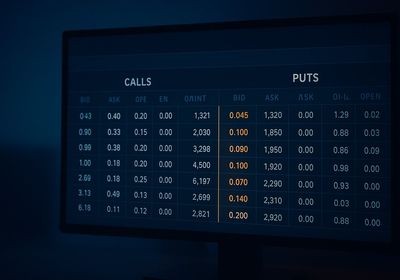
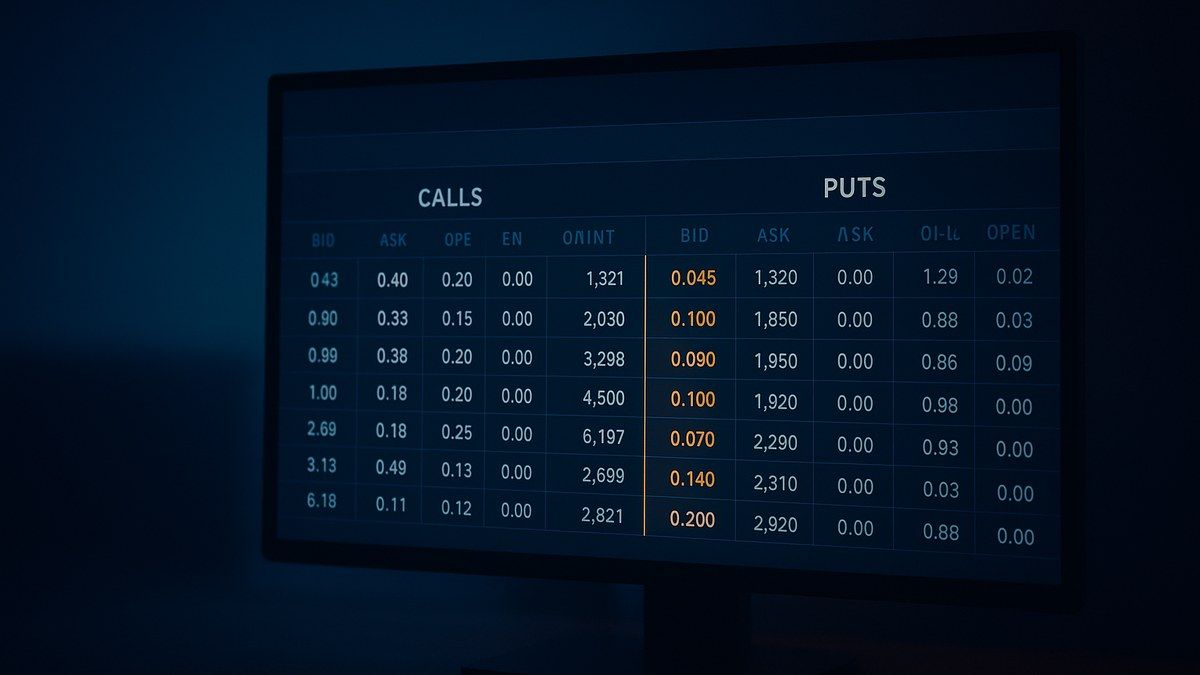
- Pick the strike. The chain shows the call side and the put side with their current bids and asks.
- Choose Sell, and set the quantity in lots.
- Choose the product type — intraday or carry-forward / normal. These attract different margin treatment and different auto-square-off behaviour, so this field matters more than it looks.
- Choose the order type. A limit order specifies the minimum premium you will accept; a market order takes whatever the book offers.
- Place a stop-loss, as a separate order or as part of a bracket if your broker supports it.
Two things we would flag from our own execution experience. First, use limit orders. Option books are thinner than equity books, particularly away from the money and on less active expiries, and a market order in a thin book is how you discover that slippage is bigger than brokerage. Second, decide the stop before you place the entry, not after you see the position move. A short option with no predetermined exit is a position relying on the tail not arriving.
Stage 4 — Daily mark-to-market, every day the position is open
This is the stage almost no explainer covers, and it is where accounts actually get into trouble.
A short option position is marked to market. At the end of each trading day the position is revalued at the closing price, and the change is settled in cash against your account. If the position has moved against you, that loss is debited — not at expiry, not when you close, but that day.
Three consequences:
- Unrealised losses consume real cash. You can be right about the eventual outcome and still run out of funds before it arrives.
- Margin shortfall triggers a call, then a square-off. If the mark-to-market debit and a risen margin requirement together exceed your available funds, the broker will ask you to add funds and, failing that, will square off the position — at whatever the market is at that moment, not at a price you chose. Brokers charge for this, and it tends to happen on your worst day.
- The position's risk changes as it ages. The Greeks are not static. Theta works harder for you as expiry approaches, but gamma — the rate at which your directional exposure changes per point of movement — also grows, and near expiry it dominates. Our walkthrough of the Greeks on expiry day covers that handover.
Stage 5 — Exit, or expiry
A short option position ends in one of three ways.
| How it ends | What happens | Note |
|---|---|---|
| You buy it back | You place a buy order for the same contract and quantity. The difference between what you sold at and what you bought at is your result. | The only ending you fully control. Available any time the market is open. |
| It expires out of the money | The contract lapses worthless. You keep the entire premium. Nothing is exercised and no settlement charge arises. | The outcome a premium seller normally wants. |
| It expires in the money | It is exercised against you and settled. For index options that is a cash settlement against the settlement price; for stock options, delivery obligations apply. | Triggers a settlement-side STT computed on a far larger base than the premium. See below. |
That third row contains a cliff worth planning around. The settlement-side STT on an exercised in-the-money option is computed on a settlement-derived base rather than on the premium, which makes it far larger — and "in the money" at expiry means by any amount at all, with no tolerance band at the strike. The mechanism, and why we publish no rates for it, is in how options trading income is taxed in India.
Our own desk treats this as an execution rule rather than a trading decision: square off short legs rather than let them run to settlement. It removes the charge cliff and the settlement-price uncertainty in one step. The settlement-price issue itself is covered in the closing auction session and expiry settlement.
A worked example, end to end
Illustrative round numbers on a NIFTY weekly, spot at 24,850. This is arithmetic, not a quoted chain and not a trade idea.
Monday. You sell one lot of the 25,100 call at ₹60. The premium × lot size is credited to your account. The exchange blocks margin — substantially more than that credit. Your maximum profit from this moment is ₹60 per unit and nothing can increase it.
Tuesday. The index drifts to 24,790. The call falls to ₹41. Mark-to-market credits you the ₹19 per unit of improvement. Nothing is realised — you still hold the obligation — but the cash has moved in your favour.
Wednesday. The index rallies to 25,010 and volatility picks up. The call rises to ₹95. Mark-to-market debits the ₹54 per unit move against you. Your position is now ₹35 per unit worse than where you sold it. Separately, because volatility rose, the margin requirement on the position has gone up. Both effects hit your available funds at once, which is the thing to anticipate: adverse price and rising margin arrive together, not separately.
Thursday, expiry. Three branches:
- Index settles at 24,960 — below the strike. The call expires worthless. You keep the full ₹60. Nothing is exercised.
- Index settles at 25,160 — the call is worth ₹60. You break even on the premium, and because it finished in the money it is exercised, so the settlement-side charge applies. You are worse off than break-even once that lands. This is why "it expired at my breakeven" is not actually break-even.
- Index settles at 25,450 — the call is worth ₹350. You lose ₹290 per unit, nearly five times the best possible outcome of the trade, from an index move of about 2.4%. Not a rare event.
Multiply each figure by your current lot size for rupee amounts, and take that lot size from the exchange's current contract specifications rather than from memory, because it is revised.
The example contains the shape of every short option: a small, fixed, known upside and a loss that scales with how far the market goes. Nothing about the mechanics changes that; only position size does.
What our own data says before you try this
We publish our negatives, so here are two.
Across 163 logged expiry sessions on our own book, the median give-back from the session's intraday profit peak to its close was 42.8%, and about 30% of sessions turned a position that had been profitable at its peak into a loss by the close. A seller's profit is not banked when it appears on the screen. It is banked when the position is closed, and a large share of what appears does not survive to the close. The timing behaviour underneath that is in the NIFTY expiry-day premium clock.
And when we tested a technical-signal-driven option-selling engine across 438 trading days, selling a short strangle on the signal lost on the order of ₹499 per lot per day at zero slippage. The defined-risk version of the same idea lost more, not less. Across eighteen structure-and-parameter combinations, none passed our acceptance gate.
We are not telling you option selling cannot work. We are telling you that knowing the mechanics on this page is not an edge, and that the premium arriving on day one is not evidence of one. Our fuller treatment of that question is in is algorithmic trading profitable — our own data.
The sequence we would actually follow
Not a strategy, a process. In this order:
- Learn the mechanics on paper. Everything on this page, until the mark-to-market stage is boring rather than surprising.
- Pick a structure and write its rules down — entry condition, exit condition, stop, square-off time, position size. If it is not written, it is not a strategy. Our beginner's guide to NIFTY option-selling strategy is the page for that choice; this one deliberately does not make it for you.
- Backtest it across regimes — low volatility, high volatility and trending, not a handful of recent quiet expiries — with realistic costs and slippage per leg. See our guide to options backtesting software in India.
- Paper trade it live for long enough to include a bad week, with real timing and real fills. Paper trading an option-selling algo covers how to do this so the results mean something.
- Then start at a size that is embarrassingly small and only increase it on measured results, not on confidence.
Most people skip steps 3 and 4 because the mechanics in steps 1 and 2 feel like enough. The mechanics are the easy part. They are also the only part this page can give you.
Frequently Asked Questions
What does it mean to write a call option?
Writing a call option means selling a call you do not own, which creates a new short position. You receive the premium immediately. In exchange you are obliged to deliver the underlying at the strike price if the buyer exercises, or for cash-settled index options to pay the cash difference. You profit if the underlying stays at or below the strike, and your loss grows as the underlying rises above it with no upper bound. Writing, selling and shorting an option all describe the same action.
How does option selling work?
You place a sell order on an option contract and receive the premium straight away. The exchange blocks margin against the position — an amount far larger than the premium, because your potential loss is not bounded by it. Each day the position stays open it is marked to market, so adverse moves are debited from your account as they happen rather than at the end. The position ends when you buy the contract back, when it expires worthless out of the money, or when it expires in the money and is exercised against you.
How do option sellers make money?
From two sources. The first is time decay: an option's premium includes an extrinsic component reflecting the possibility of future movement, and that component shrinks to zero by expiry, so a seller keeps whatever has decayed. The second is the volatility difference: options are priced on an implied volatility assumption, and if the underlying subsequently moves less than that assumption the seller captures the gap. Notably, direction is not a source — a seller can be wrong about where the market goes and still profit, provided it does not go far enough.
How much money do I need to start selling options?
Far more than the premium you intend to collect. The exchange sets a margin requirement for the specific position, computed from the volatility of the underlying and the composition of your position, and that amount is blocked while the position is open. It also rises if volatility rises, which can happen while you are already in the trade. Because requirements are revised, the only reliable source is your broker's margin calculator for the exact strike and quantity on the day you intend to trade. A useful test independent of any number: if a single position consumes most of your account, it is too large.
What is mark-to-market in option selling?
At the end of each trading day your open position is revalued at the closing price and the change is settled in cash against your account. If the position moved against you, that loss is debited that day — not at expiry and not when you close. This is why a short option position consumes real cash while it is still open, and why you can be right about the eventual outcome yet run out of funds before it arrives. If the mark-to-market debit plus a risen margin requirement exceeds your available funds, the broker can square the position off at whatever the market is at that moment.
What is option selling with an example?
Using illustrative numbers with NIFTY near 24,850, you sell one lot of the 25,100 call at 60 per unit and the premium is credited immediately, while the exchange blocks margin substantially larger than that credit. If the index settles at 24,960 the call expires worthless and you keep the full 60. If it settles at 25,160 the call is worth 60, so you break even on premium but the option finished in the money and is exercised, triggering a settlement charge that leaves you worse than break-even. If it settles at 25,450 the call is worth 350 and you lose 290 — nearly five times the best possible outcome, from an index move of about 2.4 percent.
Can I sell options without owning the underlying?
Yes. Unlike selling a share, where you must hold the share, selling an option creates a new open position rather than disposing of something you own. This is called a naked short option. The exchange permits it because it holds margin against you instead of requiring the underlying. Selling an option while holding the underlying is a different and more constrained position — a covered call — where the shares you hold cover the delivery obligation, though they do not protect you from a fall in the shares themselves.
What happens if I let a short option expire?
If it expires out of the money it lapses worthless, you keep the entire premium, nothing is exercised and no settlement charge arises — this is normally what a premium seller wants. If it expires in the money it is exercised against you and settled: index options settle in cash against the settlement price, while stock options bring delivery obligations. An in-the-money expiry also triggers a settlement-side STT computed on a settlement-derived base rather than on the premium, which makes it far larger. In the money means by any amount at all, with no tolerance band at the strike.
Do I need to enable anything to sell options in India?
Yes. Derivatives trading is not available on a trading account by default — the futures and options segment has to be activated, and as part of that activation brokers require income proof. This is a regulatory requirement rather than an individual broker's preference, so expect to provide it regardless of where you trade. The exact process and the documents accepted differ between brokers, so confirm the current requirements with yours rather than relying on a published description.
Should I use market or limit orders when selling options?
From our own execution experience, limit orders. Option order books are thinner than equity books, particularly away from the money and on less active expiries, so a market order can fill meaningfully worse than the price you saw. That slippage is frequently larger than the entire brokerage and tax bill on the trade, and unlike those charges it appears nowhere on a rate card. A related habit worth adopting: decide the stop-loss before placing the entry, rather than after watching the position move.
The Bottom Line
Selling an option means placing a sell order on a contract you do not own, collecting the premium immediately, and carrying the obligation until you buy it back or it expires. The premium is the most you can make and it is not a limit on what you can lose. Four things make it different from buying: the exchange blocks margin far larger than the premium and raises it when volatility rises; the position is marked to market daily, so losses are debited as they accrue; a margin shortfall lets your broker square you off at a price you did not choose; and an in-the-money option at expiry is exercised against you and triggers a settlement charge on a much larger base than the premium. Sellers make money from time decay and from the gap between implied and realised volatility — both real, both small, both easily consumed by costs. Learn this, then write your rules down, backtest across regimes with honest costs, paper trade through a bad week, and start small.
This article is for educational and informational purposes only and does not constitute investment advice. EliteAlgo is proprietary trading research and analytical software; it is not a SEBI-registered investment adviser and does not provide investment advice, strike or strategy recommendations, or trading tips. No strike, expiry, structure or broker mentioned or implied above is recommended. Writing options involves substantial risk of loss and is not suitable for all investors; the loss on a written option can substantially exceed the premium received and is not bounded on a naked short call. Margin requirements, contract specifications, settlement procedures, tax rates and charges are set by the exchanges, SEBI, the government and your broker and are revised from time to time — verify all current figures before trading. Backtested and logged results describe what our own data did over a specific sample and do not guarantee future outcomes or imply any expected return. Paper trade before deploying live capital and consult a SEBI-registered investment advisor before trading derivatives.