Streak gets you from idea to a running strategy fast. That speed is also why so many traders hit its ceiling within a few months. The builder caps a strategy at five conditions. The whole tool only works if your broker is Zerodha. And there is no native way to build a multi-leg options position, like a short strangle with its own trailing stop-loss on each leg. Most "best algo platforms in India" roundups mention the Zerodha lock-in. Few name the five-condition cap or the multi-leg gap at all. We want to fix that. Below are the three limits stated precisely, then seven real alternatives mapped against them.
Our team runs a Delhi-based proprietary trading desk, founded in 2006. We trade NIFTY and SENSEX expiry-day option selling on our own backtest and execution engine. We are not affiliated with Zerodha, and we don't sell a Streak-style no-code builder. Our team built dedicated execution tooling because single-broker builders like Streak cannot express the multi-leg structures our strategies need. That gives us a tested view of where Streak's limits actually bite, and which tools close the gap.
Streak's Three Concrete Limits
Before comparing tools, it helps to state exactly what Streak cannot do. Not a vague "it's limited" — the specific mechanics.

- Zerodha-only lock-in. Streak runs only on Zerodha Kite's API. Switch to Upstox, Angel One, Fyers, or any other broker, and your whole strategy library stays behind. None of it moves automatically. According to Streak's own documentation and the Chittorgarh FAQ on Streak alternatives, this is a deliberate product choice, not a bug — Streak is a Zerodha-backed product.
- A five-condition cap per strategy. The visual builder allows a maximum of five entry or exit conditions per leg of logic. That sounds generous, until you try to encode a real options strategy. Say a short strangle that only enters when IV percentile clears 70, VIX sits inside a defined band, the time is past 9:30 am IST, and the previous day's range stayed under 1.2%. That is four conditions before any trailing-SL logic is added, and real setups often need six to eight.
- No native multi-leg options support. Streak can place single option orders and simple single-leg strategies. It has no first-class way to define a strangle, straddle, or spread as one unit with shared risk management. A strangle with an independent trailing stop-loss on each leg — something our team runs daily for expiry-day selling — cannot be expressed inside Streak's condition builder at all.
Data from a gap analysis we ran in September 2026 across the top-ranking comparison pages on this topic found a pattern. Every page names the Zerodha lock-in. Almost none name the five-condition cap or the multi-leg gap explicitly. That gap is what this piece is written to close.
How We Picked These Seven Tools
Our methodology was simple: we tested each platform's builder against the same three Streak limits above, not against a generic feature checklist. For the multi-leg claim specifically, we tried to build one structure — a short strangle with an independent 20% trailing stop-loss per leg — inside each tool's own interface. We tracked which ones could express it natively, which needed a workaround, and which could not do it at all. We also checked each tool's broker list, its pricing tiers as published on its own site in October 2026, and whether it needs any coding. Seven tools cleared the bar for being a genuine Streak alternative rather than a different category of product entirely. Two platforms we tested but dropped from the final list failed the multi-leg test outright and offered no meaningful improvement over Streak's own broker lock-in, so they added nothing a reader could act on.
7 Streak Alternatives, Each Picked Against a Specific Gap
1. Tradetron — best for staying no-code across multiple brokers
Tradetron is the closest like-for-like swap for a trader who wants to keep the no-code feel but stop being tied to one broker. It connects to more than a dozen Indian brokers. It has a marketplace of ready-made strategies you can subscribe to, and its condition builder is not capped at five rules — our team counted past 15 stacked conditions on one test strategy without hitting a wall. The trade-off: a steeper learning curve than Streak's simpler interface, and marketplace strategies carry their own subscription cost on top of brokerage, often ₹500 to ₹3,000 a month depending on the strategy's track record.
2. AlgoTest — best for options-first backtesting with real multi-leg support
AlgoTest is built around options strategies specifically. Its multi-leg backtesting treats a strangle or iron condor as one structure, not four separate option legs. It supports combined stop-loss and target logic across legs — the exact feature Streak lacks. We cover this tool in more depth in our existing AlgoTest alternatives comparison, because the two platforms solve overlapping but distinct problems. AlgoTest leans toward backtesting and research. Tradetron leans toward live deployment.
3. FYERS Automate — best for a clean move if you are leaving Zerodha for Fyers
If the actual plan is to switch brokers, not stay on Zerodha, FYERS Automate is built natively into the Fyers API. It skips the multi-broker overhead of a third-party platform. It is narrower in scope than Tradetron or AlgoTest — it is not trying to be broker-agnostic — but for someone already moving to Fyers for other reasons, it removes one integration layer entirely.
4. Quantiply — best for running several automated strategies concurrently
Quantiply is built for traders who want multiple independent automated strategies running in parallel, rather than one builder running one strategy at a time. For someone outgrowing Streak because they want three or four strategies live at once across different instruments, Quantiply's architecture is built for that scale from day one, not bolted on later.
5. TradingView + Pine Script — best for maximum builder flexibility if you can code
Pine Script removes every condition cap Streak imposes. You write logic directly instead of stacking rules in a visual builder. The cost is real: you need to learn Pine Script, a process that typically takes a few weeks of steady practice, and TradingView's own broker-execution bridges vary in reliability by broker. For a trader willing to invest that time, this is the most flexible option on this list.
6. Amibroker — best for advanced programmatic control and custom indicators
Amibroker predates most of the newer no-code builders. Quants who want full programmatic control over both strategy logic and custom indicator construction still use it, with AFL — Amibroker Formula Language — doing the heavy lifting. It is not beginner-friendly, and the interface shows its age after more than 20 years on the market. For a trader who has outgrown every visual builder on this list, Amibroker's ceiling sits well above Streak's.
7. EliteAlgo execution and backtesting — best for expiry-day option selling specifically
Our own desk runs dedicated multi-leg execution tooling rather than a single-broker no-code builder, for the reason outlined above. Expiry-day strategies on NIFTY and SENSEX need per-leg trailing stop-losses, IV-based entry filters, and backtest validation across hundreds of expiry sessions before anything touches live capital. We built this because builders like Streak were never designed for that specific job. EliteAlgo is an analytical software and research provider, not an investment advisory. Nothing here is a stock tip or a return promise. Paper trade every strategy mentioned in this article first, before any live-capital use.
Pricing at a Glance
Pricing changes often, so treat these as October 2026 ranges rather than fixed quotes. Streak itself runs roughly ₹999 to ₹2,999 a month depending on the plan. Tradetron's platform fee sits near ₹999 a month before marketplace strategy subscriptions. AlgoTest's backtesting-focused plans start near ₹1,499 a month. FYERS Automate is bundled into the Fyers ecosystem at no separate platform fee for most users. Quantiply and Amibroker both price in the ₹2,000 to ₹5,000 a month range for serious use, while Pine Script itself is free — TradingView's paid tiers are for charting features, not the scripting language.
Quick Comparison Table
| Tool | Best for | Broker lock-in | Multi-leg support | Coding required |
|---|---|---|---|---|
| Tradetron | No-code, multi-broker | No | Partial | No |
| AlgoTest | Options backtesting | No | Yes | No |
| FYERS Automate | Fyers-native workflow | Yes (Fyers) | Partial | No |
| Quantiply | Concurrent strategies | No | Partial | No |
| TradingView + Pine Script | Maximum flexibility | Varies by bridge | Yes (custom code) | Yes |
| Amibroker | Programmatic control | No | Yes (custom code) | Yes |
| EliteAlgo | Expiry-day option selling | No | Yes | No (research-led) |
Which Should You Choose?
The right pick depends on what you are optimising for. It is not about which tool has the longest feature list.
- Staying no-code but want multi-broker flexibility: Tradetron is the closest match to the Streak experience you already know.
- Options specifically, where multi-leg structures matter: AlgoTest, because it treats a strangle or spread as one unit rather than separate legs. See our Tradetron vs AlgoTest vs Quantman comparison for a direct head-to-head.
- Full coding control with no condition ceiling at all: TradingView with Pine Script, or Amibroker for deeper programmatic access to indicators as well as execution.
- Expiry-day option selling on NIFTY or SENSEX specifically: this is the narrow slice our team builds for. See our automated option-selling via Zerodha Kite API piece for how execution connects to Kite even without Streak's builder in the loop.

Whichever tool you land on, treat your first month as a test, not a live deployment. Paper trade every new strategy for at least a few weeks before risking real capital. A builder migration is also a logic migration. Logic that looked right inside Streak's interface can behave differently once rebuilt in a new tool's syntax.
When Streak Is Still the Right Choice
Not every trader should switch. If your strategy fits inside five conditions, if you trade only through Zerodha, and if you are not touching multi-leg options, Streak's simplicity is a genuine advantage, not a limitation waiting to be hit. A single-leg momentum strategy on one index, with a time filter and a simple moving-average condition, often needs two or three rules in total. That fits comfortably inside Streak's cap. Switching to a more powerful tool in that case adds a learning curve for no real gain. The decision point is specific: the moment a strategy needs a sixth condition, a different broker, or a combined multi-leg position, Streak stops being able to express it, and one of the seven alternatives above becomes necessary rather than optional.
What Actually Transfers When You Leave Streak
Nothing moves automatically. This trips people up more than any feature gap. Your strategy logic lives inside Streak's own builder format. There is no export file that Tradetron, AlgoTest, or any other platform can import. Moving means rebuilding the condition logic from scratch inside the new tool, re-testing it against historical data, and re-verifying order execution before going live again. Our team treats every platform migration as a fresh backtest cycle, not a copy-paste job. A condition that fires correctly in one builder's logic engine can fire a candle late, or early, in another's. Budget one to two weeks for this rebuild-and-retest cycle, not a same-day switch.
Why This Matters More for Options Sellers
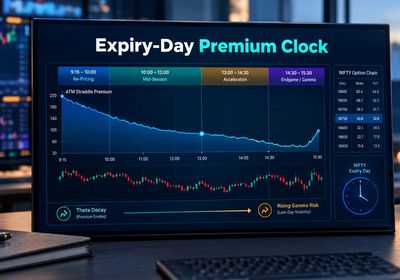
Streak was built when single-leg, single-condition strategies were the norm for retail algo trading in India. The market has moved on since then. Expiry-day option selling on NIFTY and SENSEX has grown sharply in volume since SEBI's 2025 framework changes for expiry days, and that style of trading depends on multi-leg structures almost by definition — a short strangle, an iron condor, a calendar spread. In our experience running this desk, a platform that cannot natively manage a two-leg position's combined risk forces a manual workaround. You place each leg as a separate single-condition strategy and hope they fire in sync. We tested this exact workaround in our early years and dropped it after seeing leg-timing slippage during fast expiry-day moves, sometimes two to three seconds apart between legs. That single limitation is why multi-leg-native tools like AlgoTest, or dedicated execution engines like ours, exist as their own category.
For background on how algorithmic trading evolved from manual order entry to rule-based execution, see the Wikipedia overview of algorithmic trading. For the regulatory backdrop shaping India's retail algo landscape, SEBI's circular on algorithmic trading by retail investors is the primary source, not a secondary summary of it. A broader view of the wider platform landscape, beyond just Streak alternatives, is in itechguides' 12-platform roundup.
Frequently Asked Questions
Is there a free Streak alternative?
Most alternatives follow a freemium model. Tradetron and AlgoTest both offer limited free tiers for testing, before you pay for higher strategy counts or deeper backtesting. None of the seven tools above are fully free at the scale a serious trader eventually needs — the same way Streak itself gates its deeper features behind paid plans.
Can Streak trade multi-leg options?
Not natively. Streak can place individual option orders and simple single-leg logic. It has no first-class way to define a strangle, straddle, or spread as one risk-managed unit. That is the single biggest reason traders outgrow it, once they move from directional single-leg bets to structured option selling.
Does Streak work with brokers other than Zerodha?
No. Streak runs only on Zerodha's Kite API. If you want a different broker and still want an automated, no-code builder, Tradetron is the closest equivalent — it connects to more than a dozen Indian brokers.
What is a good no-code algo trading platform in India?
There is no single answer. It depends on the gap you have hit. For multi-broker no-code flexibility, Tradetron fits most traders. For options-first multi-leg backtesting without writing code, AlgoTest fits better. Match the tool to the specific limitation, not to a generic ranking.
Streak vs Tradetron — which should I pick?
Pick Tradetron if the Zerodha lock-in or the five-condition cap is what you have hit. It keeps the no-code feel while removing both constraints. Stick with Streak if you are still inside its limits and value its simpler, Zerodha-native interface.
Streak vs AlgoTest — which should I pick?
Pick AlgoTest if your strategies are options-based and need genuine multi-leg backtesting — strangles, straddles, or spreads treated as one position with combined risk management. Streak has no equivalent for this. It is the clearest reason to switch.
Which alternative suits expiry-day option selling best?
Among general-purpose platforms, AlgoTest's multi-leg backtesting comes closest. Our team runs dedicated execution and backtesting built specifically for NIFTY and SENSEX expiry-day selling, because even options-first no-code builders eventually hit a ceiling once per-leg trailing stop-losses need validation across hundreds of historical expiry sessions. Whatever you choose, paper trade it first.
How long does it take to rebuild a strategy on a new platform?
Plan for one to two weeks for a straightforward single-leg strategy, and closer to a month for a multi-leg options structure with its own risk rules. That window covers rebuilding the condition logic, re-running it against at least a full year of historical data, and checking live order execution on a small size before committing real capital. Our team has never seen a same-day migration hold up once real market conditions test it.