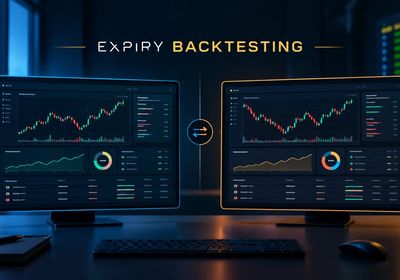

Most "Algobi alternatives" content ranks platforms by follower counts, app-store ratings, or how slick the onboarding flow looks. None of that tells you whether a platform can actually validate a multi-leg NIFTY or BANKNIFTY option-selling strategy before you risk capital on it. This list ranks alternatives specifically on backtesting depth for option sellers — how faithfully each platform's backtest engine models real multi-leg fills, margin, and expiry-day conditions — because that is the one criterion that determines whether the numbers you see before going live have any relationship to what happens after.
This is written from inside the industry: I run EliteAlgo, an algo trading company operating in India since 2006, and our own strategy pipeline lives or dies by backtest fidelity on intraday expiry-day option selling. That's the lens applied here.

A note on accuracy: this article deliberately avoids inventing specific win rates, subscriber counts, or pricing figures for any platform, because those change frequently and cannot be independently verified in real time from here. Where a claim needs live confirmation, this article says so and points you to the vendor's own site rather than guessing.
Quick Answer: The Ranked List
- A dedicated options-backtesting-first platform (e.g., AlgoTest-style tools built specifically around options strategy backtesting) — highest backtesting depth for option sellers specifically, because options-native fidelity is the core product, not a bolt-on.
- A leg-and-payoff-first strategy builder (e.g., QuantMan-style tools) — strong for multi-leg construction and margin awareness at the strategy-design stage, backtesting depth should be verified against your own strategy.
- A no-code multi-asset deployment platform with a strategy marketplace (e.g., Tradetron-style tools) — strong on execution breadth and automation, backtest quality varies by individual strategy/strategy author rather than being uniformly options-native.
- A signal/screener-driven algo platform — useful for directional and momentum strategies, generally weaker for multi-leg, IV-driven option-selling logic since options are treated as a leveraged directional proxy rather than a volatility instrument.
- A purpose-built intraday expiry-day option-selling backtesting engine (e.g., EliteAlgo's own) — narrower in asset-class scope than the above, but built specifically around tick-level multi-leg options fills, per-leg margin modeling, and expiry-day (0DTE) execution realism, which is the exact gap general-purpose platforms leave open for serious option sellers.
The ranking criterion throughout is backtesting depth for multi-leg option selling specifically — not overall platform popularity, price, or breadth of asset classes supported. A platform can be excellent for equity or futures strategies and still rank lower here purely because options aren't its core design focus.
Why "Algobi Alternatives" Searches Deserve a Different Answer
Algobi-alternative searches are typically shopping-intent: someone already evaluated (or used) Algobi, found a gap, and is now comparing substitutes. The problem with most alternative-ranking content is that it optimizes for breadth of comparison — ten platforms, one paragraph each — rather than depth on the one thing that actually matters for an option seller: does the backtest reproduce something close to what you'd actually get filling multi-leg option orders during volatile, gamma-heavy conditions?
That question breaks into three sub-questions this list uses to rank every alternative:
- Fill methodology — does the backtest use real bid/ask option quotes at each timestamp, or a settlement/theoretical approximation that can overstate edge?
- Margin realism — is SPAN + exposure margin modeled per leg, intraday, or only checked at entry?
- Expiry-day (0DTE) fidelity — does the platform explicitly support and realistically simulate the last-hour gamma risk that defines NIFTY/SENSEX weekly expiry trading?
Ranked Comparison Table
| Rank | Platform Type | Backtesting Depth for Options | Multi-Leg Support | Margin Modeling | Expiry-Day (0DTE) Fit |
|---|---|---|---|---|---|
| 1 | Options-backtesting-first platform | High — options-native backtesting is the core product | Yes, designed around it | Verify per-leg intraday modeling directly with vendor | Reasonable — worth a direct trial on your own strategy |
| 2 | Leg-and-payoff-first strategy builder | Moderate-to-high — strong at construction, verify backtest fill methodology directly | Yes, strike/leg-level UI | Margin shown at construction stage — verify intraday behavior | Reasonable — verify execution latency directly |
| 3 | No-code multi-asset deployment + marketplace | Variable — depends on individual strategy/author, not platform-uniform | Supported, quality varies | Verify directly; not the platform's primary design focus | Workable, but risk/quality is largely on you or the strategy author |
| 4 | Signal/screener-driven algo platform | Lower for options specifically — options treated as directional proxy | Often limited or absent | Not typically the design focus | Weak fit — not built around IV-driven multi-leg logic |
| 5 | Purpose-built expiry-day option-selling engine | High for the specific use case — narrower scope, deeper fidelity | Core design focus | Built around per-leg, intraday margin awareness | Core design focus — this is the exact problem it's built to solve |
Verify all vendor-specific claims (pricing, exact integrations, current feature set) directly on each platform's official site — this table intentionally avoids naming precise, easily-stale figures.
1. Options-Backtesting-First Platforms
Why they rank highest for backtesting depth: platforms whose core marketed value proposition is options strategy backtesting (rather than general algo deployment) have the strongest structural reason to invest in options-native fill modeling, IV handling, and multi-leg simulation, because that's what their user base is actually there to evaluate. This is also the category behind one of the highest-intent search terms in our own keyword research — traders specifically asking what these platforms do when connected to a broker like Zerodha. See our companion piece on AlgoTest + Zerodha: what it actually does and doesn't do for a detailed breakdown of that exact pairing.
What to verify before trusting the backtest: ask directly whether historical option prices used in the backtest are actual quoted bid/ask at that timestamp or a theoretical/settlement approximation — this single question separates a trustworthy multi-leg backtest from an optimistic one. Confirm current features on the vendor's own site, e.g. AlgoTest, rather than relying on secondhand comparison articles, including this one.
2. Leg-and-Payoff-First Strategy Builders
Why they rank second: tools that let you construct a strategy by selecting individual legs (ATM, OTM1, OTM2, etc.) and see a live payoff diagram and margin estimate map closely to how experienced option sellers actually think about a trade. That intuitive fit is a real advantage for strategy design — the open question is whether the backtest layer underneath that UI carries the same fidelity as the construction layer, which is worth testing directly rather than assuming.
What to verify: whether margin is recalculated intraday as the position moves (not just estimated at entry), and whether the backtest engine's fill assumptions are documented anywhere you can check.
3. No-Code Multi-Asset Deployment Platforms with a Strategy Marketplace
Why they rank third: these platforms genuinely excel at breadth — multiple asset classes, multiple brokers, and a marketplace where you can subscribe to strategies built by others. For an option seller, the tradeoff is that backtest quality on a marketplace strategy is only as good as the individual strategy author's rigor, and that isn't independently verified by the platform in a way an outside user can verify. If you build your own strategy on one of these platforms rather than renting one, the same fill-methodology and margin questions from categories 1 and 2 apply — ask them directly.
Where this matters most: if your book spans multiple asset classes and option selling is only one part of it, the breadth here can outweigh the backtesting-depth gap. If your entire book is option selling, weigh this against categories 1, 2, and 5.
4. Signal/Screener-Driven Algo Platforms
Why they rank lower for option sellers specifically: these platforms are generally built around generating buy/sell signals from technical indicators on the underlying, then executing — options, where supported, are usually treated as a leveraged directional bet rather than a volatility/theta instrument. Strategies like calendar spreads, delta-neutral adjustments, or IV-driven strike selection are typically poorly supported or unavailable, which is a structural mismatch for serious option sellers rather than a minor limitation.
When they still make sense: if you're primarily a directional trader who occasionally uses options as a leveraged proxy rather than running defined multi-leg option-selling strategies, this category can still be a reasonable fit — just not for the specific use case this article is ranking against. For that kind of trading, indicators built for options traders on a charting platform are usually a more direct route than a full algo platform.
5. Purpose-Built Intraday Expiry-Day Option-Selling Engines
Why this category ranks highest on the specific criterion, with the caveat of narrower scope: platforms built from the ground up around intraday, 0-1 DTE, multi-leg NIFTY/SENSEX option selling — like EliteAlgo's backtesting engine — are designed around exactly the three questions this article uses to rank every alternative: real bid/ask fill fidelity, per-leg intraday margin modeling, and expiry-day gamma-risk simulation. The tradeoff is scope: these tools are usually narrower in asset-class breadth than a general-purpose multi-asset platform, because depth on one hard problem was prioritized over breadth across many.
Who this fits: traders whose entire strategy book is intraday expiry-day option selling on NIFTY/SENSEX (or similar weekly-expiry index options), where backtest fidelity on multi-leg fills and margin realism directly determines whether a strategy that looks good on paper survives contact with a live market.
Common Mistakes When Evaluating Algobi Alternatives
Mistake 1: Ranking by follower count or app-store rating instead of backtest methodology. Popularity signals adoption, not fidelity. A platform can have a large user base built around directional trading and still be a poor fit for multi-leg option-selling backtests.
Mistake 2: Not asking directly how the backtest sources historical option prices. This is the single highest-leverage question you can ask any platform in this list. If the answer is vague or unavailable, treat the reported backtest numbers with real skepticism.
Mistake 3: Testing only calm-market periods. Option-selling strategies behave very differently across India VIX regimes. A strategy that looks strong in a low-volatility window can behave very differently through a high-volatility event — always request or run a backtest across at least one elevated-volatility period before trusting the numbers.
Mistake 4: Ignoring margin utilization until it's a live problem. A backtest with a clean equity curve can still hide a day where the strategy would have breached available margin intraday, forcing a broker-side square-off that never appears in the simulated report.
Mistake 5: Assuming "alternative to Algobi" means "interchangeable with Algobi." These platforms differ meaningfully in design philosophy — no-code deployment marketplace vs. options-backtesting-first vs. leg-and-payoff builder vs. signal-driven vs. purpose-built expiry-day engine. The right alternative depends on what you actually need the platform to do well, not just that it's a substitute in the broadest sense.

Evaluation Checklist Before You Switch
- Ask each candidate platform directly: are option backtest fills based on actual bid/ask quotes at the entry/exit timestamp, or a theoretical/settlement approximation?
- Confirm whether margin is recalculated intraday as a multi-leg position moves, not just estimated once at entry.
- Run at least one backtest across a known high-volatility historical window (a budget-day session or a global risk-off event) rather than only calm markets.
- If the platform supports live/semi-automated execution, time an actual order placement during a live session to sanity-check latency claims.
- Verify current pricing, plan tiers, and broker integrations directly on the vendor's own site — third-party comparisons, including this one, can go stale within months as platforms update their offerings.
- Match the platform category (1 through 5 above) to what your actual trading book needs — breadth across assets, options-native backtesting depth, or expiry-day-specific fidelity — rather than picking the most-mentioned name in a Telegram group.
How to Weight These Five Categories for Your Own Book
Ranking alternatives is only useful if you can translate the ranking into a decision for your own trading. Here's a simple weighting exercise: write down the percentage of your trading capital that goes into intraday expiry-day multi-leg option selling versus everything else (directional futures, equity swing trades, longer-dated options positions). If that number is above roughly 80%, the backtesting-depth gap between category 5 (purpose-built expiry-day engines) and the broader categories above it matters enormously, because your entire results depend on the fidelity of one specific kind of backtest. If option selling is one of several strategies you run and it's a smaller slice of capital, the breadth advantage of categories 1 through 3 — supporting multiple asset classes and brokers from one dashboard — can reasonably outweigh the fidelity gap, since operational simplicity across your whole book has its own value.
This is also why a single "best alternative" answer is close to meaningless without knowing your book composition — a ranking that's correct for a pure expiry-day option seller can be the wrong pick for someone running a diversified multi-strategy book, and vice versa.
The Cost of Getting Fill Methodology Wrong
It's worth spelling out concretely why the fill-methodology question (real bid/ask vs. theoretical/settlement price) matters as much as this article claims it does, rather than treating it as a technical footnote. Options bid/ask spreads widen meaningfully during periods of low liquidity or high volatility — exactly the conditions under which many option-selling strategies are entering or exiting positions, since strike selection and adjustment triggers are often tied to volatility conditions in the first place. A backtest that fills every trade at the theoretical mid-price effectively assumes you always get the best possible price on both entry and exit, on every single trade, across the entire backtest period. In live trading, you don't — you cross the spread, and on wider-spread days (which tend to correlate with the volatile days where option-selling risk concentrates) that gap between theoretical and real fills can be the difference between a strategy that looks solidly profitable on paper and one that's marginal or losing after real execution costs. This is not a minor technical detail; it's frequently the single biggest source of divergence between backtested and live results for multi-leg option-selling strategies specifically, more so than most other retail trading styles.
Where Broker Choice Intersects With Platform Choice
One more factor worth separating out explicitly: your choice of algo platform and your choice of broker are related but distinct decisions, and conflating them can lead to a worse outcome on both fronts. A platform's backtesting depth and strategy-construction workflow are largely independent of which broker you eventually connect it to for execution — but the broker's own API reliability, documented order latency, and any subscription requirements for API access are a separate layer of risk and cost that sits on top of whichever platform you choose from this list. Before finalizing a platform decision, confirm it supports your existing broker (or that you're willing to open a new brokerage relationship), and separately verify your broker's own API terms and any associated costs, since these are usually controlled by the broker, not the algo platform.
Frequently Asked Questions
What is Algobi, and why are people looking for alternatives?
Algobi is one of several retail algo/strategy platforms Indian traders evaluate; searches for alternatives typically come from traders who've used it or researched it and are now comparing substitutes for gaps in backtesting depth, broker support, or pricing fit. Confirm Algobi's current features directly on its own site before comparing, since this article focuses on ranking the alternative categories rather than auditing Algobi itself.
Which type of alternative is best for multi-leg NIFTY option selling specifically?
Based on the backtesting-depth criterion used in this article, options-backtesting-first platforms and purpose-built intraday expiry-day engines rank highest, because options-native fill and margin fidelity are core to their design rather than a secondary feature. The right pick still depends on your specific strategy and should be verified with your own backtest on each candidate.
Is a purpose-built expiry-day engine always better than a general-purpose platform?
Not universally — general-purpose platforms offer breadth across asset classes and brokers that a narrower, options-only engine won't match. If your entire trading book is intraday expiry-day option selling, the narrower tool's backtest fidelity on that exact use case is usually the more decisive factor; if you trade multiple styles or assets, breadth may matter more.
How do I verify a platform's backtest fill methodology myself?
Ask the vendor directly and in writing whether historical option prices used in backtests are actual quoted bid/ask at the relevant timestamp or a theoretical/settlement-based approximation, and cross-check one of your own past trades against the platform's backtest output for that same trade.
Does backtesting depth alone guarantee a strategy will work live?
No. Even a high-fidelity backtest is a model, not a guarantee — live execution introduces its own slippage, latency, and market-impact factors. Backtesting depth reduces the gap between simulated and live results; it does not eliminate risk, and undefined-risk option-selling strategies always carry the possibility of outsized loss on adverse moves.
Are any of these platforms SEBI-registered investment advisors?
No — these are analytical, backtesting, and execution/automation software platforms, not investment advisory services. Always verify each platform's current regulatory status directly and consult SEBI's guidance on algorithmic trading before connecting live capital.
Written by Rajeev Gupta, founder of EliteAlgo, an algo trading company operating in India since 2006 with a focus on intraday expiry-day option-selling strategy research and execution. This ranking reflects EliteAlgo's independent backtesting-depth evaluation framework and does not constitute investment advice. See our algo trading strategies guide and best algo trading firms in India for related reading.